

SEO Scope and Career Opportunities in Pakistan
Search Engine Optimization has quietly become one of the most practical career choices a young Pakistani can make right now. You don’t need an expensive degree, you don’t need connections, and you don’t even need to leave your city. What you need is a laptop, a stable internet connection, and the willingness to learn something new every single month, because that is exactly how this field works.
If you have been wondering whether SEO is actually worth your time in 2026, or whether it’s just another buzzword thrown around by marketing agencies trying to sell their services, this article will walk you through the real picture. We’ll look at why businesses in Pakistan need SEO more than ever, what kind of jobs and freelance income are realistically available, and how you can build a career in this space without wasting years figuring things out the hard way.
Why SEO Has Become So Important in Pakistan
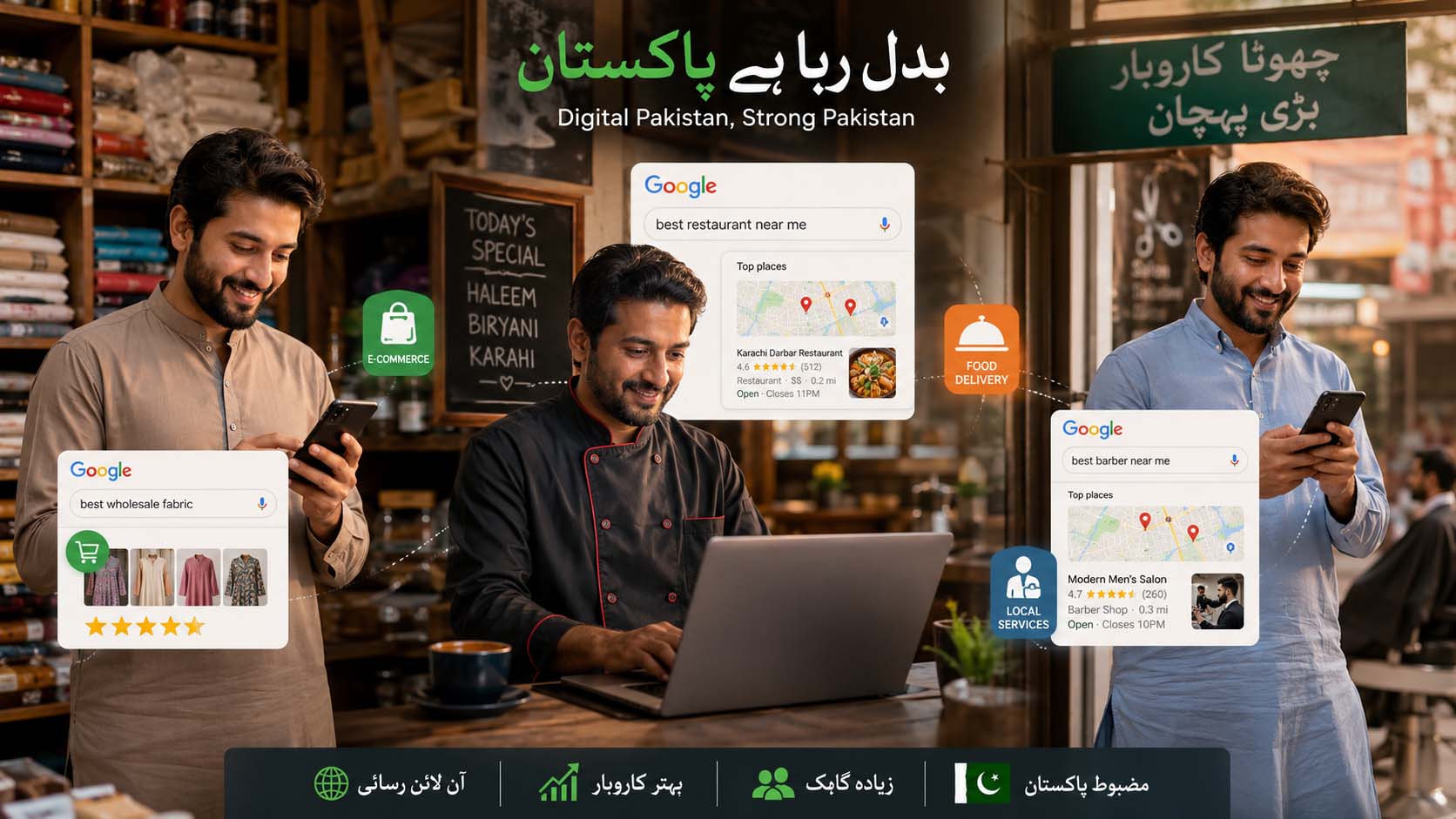
Pakistan now has well over a hundred million people online, and that number keeps climbing every year. Smartphones got cheaper, mobile data got faster, and suddenly your local kiryana store owner, your cousin’s clothing brand, and the dentist down the street all started thinking about how to get found on Google. That shift didn’t happen overnight, but it has reached a point where any business without a search presence is basically invisible to a huge chunk of its potential customers.
Think about how people actually behave today. Someone wants to buy shoes, they search “best running shoes in Lahore” before walking into any shop. Someone needs a plumber, they type it into Google rather than asking a neighbour. Someone wants to learn a skill, they search for tutorials instead of buying a book. Every single one of these moments is a chance for a business to be seen, or to be completely missed, depending on whether their SEO is in order.
Platforms like Daraz, Foodpanda, and countless local service marketplaces have shown Pakistani business owners something important: being online isn’t optional anymore, it’s where the money actually moves. And once a business owner accepts that reality, the very next question is always the same. How do we get found? That question is where SEO professionals come in, and it’s why the demand for skilled people in this field keeps growing faster than the supply.
What SEO Actually Involves
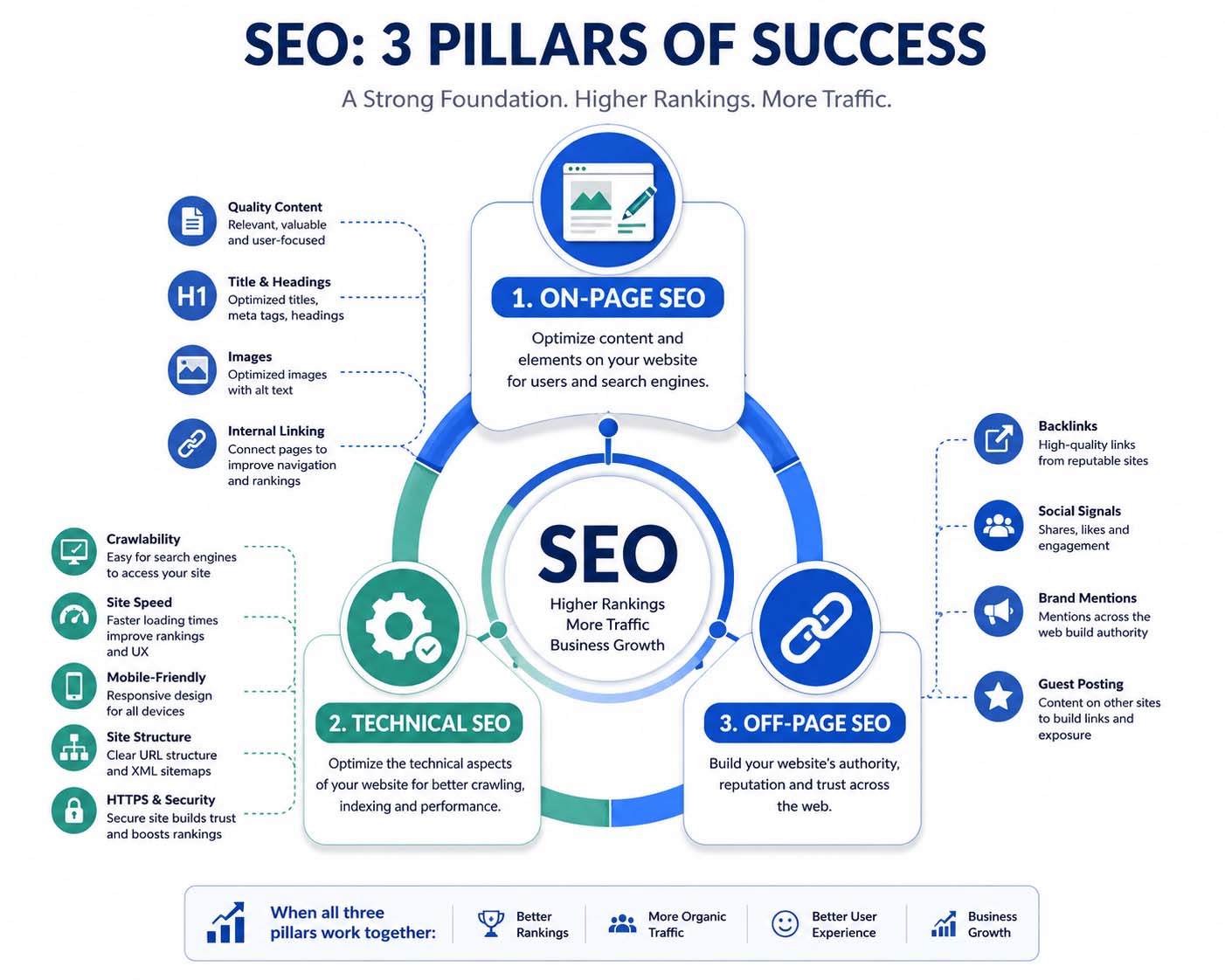
Before getting into careers and salaries, it helps to be clear about what SEO actually is, because a lot of beginners come in with the wrong idea. SEO is not a single task. It’s a combination of techniques that help a website show up higher in search results, which in turn brings more visitors, more inquiries, and more sales without paying for every single click the way you would with ads.
It generally breaks down into three connected areas. On page work covers things like writing content around the right keywords, structuring titles and headings properly, and making sure each page actually answers what someone is searching for. Technical work covers page speed, mobile friendliness, site structure, and making sure search engines can actually crawl and understand your website without running into errors. Off page work covers building your site’s reputation through backlinks, mentions, and overall trust signals from other corners of the internet.
A good SEO professional understands how all three pieces fit together. Someone who only knows keywords but ignores technical issues will hit a ceiling fast. Someone who fixes technical problems but writes content nobody wants to read will also struggle. The people who do well in this field are the ones who treat SEO as a complete system rather than a checklist.
Do You Need a Specific Degree to Get Into SEO
This is probably the most common question from people considering this field, and the honest answer is no, you don’t need a particular degree to start. SEO is one of those rare professional paths where your portfolio and practical results matter far more than your transcript.
That said, certain backgrounds do give you a head start. If you’ve studied computer science, you’ll find technical SEO concepts like site architecture, server responses, and structured data much easier to grasp. If your background is in marketing or mass communication, you’ll likely have an easier time with content strategy, audience research, and messaging. Neither background is required, but both can shave months off your learning curve if you already have them.
What actually matters more than your degree is whether you can sit down, run an actual site audit, fix a real problem, and explain why you fixed it that way. Employers and clients in this field have learned to look past certificates and look directly at demonstrated skill, because SEO changes too quickly for a four year degree to keep up with it anyway.
The Skills That Actually Get You Hired
If you’re serious about building a career here, these are the core skills worth focusing your energy on.
Keyword research sits at the foundation of almost everything else. You need to understand what people are actually typing into search engines, why they’re searching for it, and how competitive those terms are. Tools like Google Keyword Planner, Ahrefs, SEMrush, and Ubersuggest are standard in this work, and most of them offer free versions that are good enough to start learning with.
On page optimization is your next building block. This includes writing compelling titles and meta descriptions, structuring content with proper headings, optimizing images, and making sure internal links connect your pages in a way that makes sense to both readers and search engines.
Technical SEO is where many beginners get intimidated, but it doesn’t have to be complicated if you build it up gradually. You’ll want to understand page speed, mobile responsiveness, indexing, crawlability, and basic structured data markup. You don’t need to become a developer, but you do need to be comfortable having technical conversations with one.
Link building remains one of Google’s strongest ranking signals even after years of algorithm changes. Learning how to earn backlinks through genuine outreach, guest contributions, and digital PR rather than buying low quality links is a skill that separates serious professionals from people running quick, risky shortcuts.
Analytics rounds out the list. If you can’t read Google Analytics or Search Console and translate the numbers into a clear next step, you’re only doing half the job. Clients and employers want to know what’s working and what isn’t, and that comes down to your ability to interpret data properly.
Career Paths You Can Choose From
One thing people don’t realize when they start out is just how many specialized directions SEO actually offers. You’re not locked into one role forever, and as you grow, you can shape your career around whichever area genuinely interests you.
An on page SEO specialist focuses on content structure, keyword placement, and making sure individual pages are built to both rank and convert. A technical SEO expert digs into site speed, crawl budgets, indexing issues, and the kind of backend problems that quietly hurt rankings without anyone noticing until traffic drops. A link building specialist spends their time on outreach, relationship building, and earning quality backlinks that push a site’s authority upward. A local SEO expert works with businesses that depend on nearby customers, optimizing Google Business Profiles and local citations for restaurants, clinics, salons, and service providers across cities like Lahore, Karachi, and Islamabad. An ecommerce SEO specialist handles product pages, category structures, and the unique ranking challenges that come with online stores. A web analytics expert lives inside the data, constantly testing and interpreting what’s driving or blocking growth. And an SEO outreach specialist focuses almost entirely on relationship building, guest posting, and digital PR work that earns a brand mentions and links from credible sources.
Most professionals don’t stay narrowly focused on just one of these forever. Many start broad, figure out what they enjoy and where they’re naturally strong, and then specialize once they have a few years of hands on experience behind them.
What You Can Realistically Earn
Let’s talk numbers, because this is usually the part people care about most. Salaries in Pakistan’s SEO industry vary quite a bit depending on experience, city, company size, and whether you’re working locally or with international clients.
For someone just starting out as an SEO intern with little to no experience, monthly pay usually falls somewhere between fifteen thousand and twenty five thousand rupees. Once you move into a junior executive role with around one to two years of practical experience, that range climbs to roughly thirty thousand to fifty five thousand rupees a month. A senior executive with two to four years under their belt and a track record of real results can expect somewhere between fifty five thousand and ninety thousand rupees monthly. Team leads with four to six years of experience, who are now managing campaigns and mentoring juniors, typically earn between ninety thousand and one hundred fifty thousand rupees. And SEO managers with six or more years of experience, often overseeing entire departments or major client accounts, can earn anywhere from one hundred fifty thousand up to three hundred thousand rupees a month or more at larger agencies.
These figures shift constantly as the market matures, so treat them as a general guide rather than a fixed rulebook. What matters more than the exact number is the trend, and the trend is clearly upward as more businesses compete for fewer experienced professionals.
Freelancing tells a different story entirely, and honestly, it’s where a lot of the bigger income potential lives. Pakistan currently sits among the top freelancing countries in the world, with freelancers bringing in hundreds of millions of dollars in foreign exchange every year through platforms like Upwork, Fiverr, and direct client work. SEO consultants working with international clients commonly earn anywhere from a few hundred dollars a month when starting out to several thousand dollars monthly once they’ve built a strong reputation and a steady stream of repeat clients. Getting paid in dollars while living in Pakistan, where the cost of living is comparatively low, is exactly why so many young professionals are choosing this path over a traditional office job.
And then there’s the entrepreneurial route. Plenty of people who learned SEO properly went on to build their own niche websites, ecommerce stores, or affiliate marketing projects, earning passive income from traffic they built themselves rather than working for a client at all. Some eventually start their own small agencies, hiring junior SEO staff and managing multiple client accounts. There’s genuinely no ceiling here if you’re willing to put in consistent work over a long enough stretch of time.
Where the Jobs Actually Are
SEO roles are now posted constantly across Karachi, Lahore, Islamabad, and increasingly in smaller cities too as more local businesses go digital. Software houses hire SEO specialists to support their own client projects. Dedicated digital marketing agencies build entire teams around SEO, content, and paid advertising. Ecommerce companies need SEO people to keep their product pages competitive. Even traditional businesses, from real estate firms to educational institutes, are now bringing SEO professionals onto their in house marketing teams rather than outsourcing everything.
If you’re job hunting, checking LinkedIn, Rozee.pk, and individual company career pages regularly will give you a realistic sense of what employers are actually looking for in terms of skills and tools. Pay close attention to the tools mentioned in job postings, since that tells you exactly what to practice with before applying.
How to Actually Land Your First SEO Job
Knowing the theory is one thing, but getting hired requires a slightly different approach. Here’s what genuinely moves the needle.
Build something real before you apply anywhere. Start a small blog, help a friend’s business with their website, or pick an abandoned site and try improving its rankings as a personal project. A portfolio with actual before and after results, even from a small project, carries far more weight in an interview than a stack of certificates ever will.
Get comfortable explaining your thinking, not just your actions. Interviewers want to know why you made a particular decision, not just what tool you used. If you can walk someone through your reasoning on a keyword choice or a technical fix, you immediately stand out from candidates who memorized definitions without understanding the logic behind them.
Stay current without becoming obsessive about it. Google rolls out updates constantly, and you don’t need to chase every single one, but you do need to follow a couple of reliable sources regularly, whether that’s Search Engine Journal, Search Engine Land, or a trustworthy local digital marketing community where people discuss what’s actually changing on the ground in Pakistan.
Widen your skill set slightly beyond pure SEO. The professionals who get hired fastest and promoted quickest are usually the ones who understand how SEO connects with content marketing, basic web design principles, and social media. You don’t need to master all of these, but having working knowledge of how they support each other makes you a far more valuable hire than someone who only understands keywords in isolation.
How AI Has Changed the SEO Game
It would be dishonest to write about SEO in 2026 without addressing artificial intelligence, because it has genuinely reshaped how this work gets done. Tools that assist with keyword research, content drafting, and competitor analysis are now part of a normal SEO workflow, and Pakistani professionals are using them just as much as anyone else around the world.
But here’s the part that actually matters for your career. Google’s recent updates have made it increasingly clear that thin, AI generated content without real human insight, original research, or genuine expertise behind it tends to struggle in rankings. This isn’t bad news for SEO professionals, it’s actually the opposite. It raises the value of people who know how to use AI as an assistant rather than a replacement, who can combine speed from automation with the judgment, experience, and original thinking that only a real person brings to the table. If anything, understanding how AI is reshaping search behaviour, including how people are now searching directly through AI chat tools, has become its own essential skill for anyone serious about staying relevant in this field.
Mistakes That Slow Beginners Down
A lot of people entering this field repeat the same avoidable mistakes, so it’s worth naming them directly.
Treating SEO purely as a keyword stuffing exercise is probably the biggest one. Search engines have grown far more sophisticated, and they now reward content that genuinely satisfies what a searcher is looking for, not pages that mechanically repeat a phrase fifteen times. Ignoring technical health is another common trap, where someone spends weeks polishing content while their site quietly suffers from slow load times or broken pages that undo all that effort. Expecting fast results trips up almost everyone at some point, because organic growth typically takes three to six months to show meaningful movement, and giving up at month two means losing exactly when results were about to appear. Skipping link building entirely is another mistake, since backlinks remain one of the strongest trust signals search engines use, even with everything else that’s changed. And ignoring local SEO is a missed opportunity for anyone working with a business that depends on nearby customers, because a properly optimized Google Business Profile can drive walk in traffic that no amount of national ranking ever will.
Where This Career Is Headed
The trajectory here is hard to miss. Pakistan’s internet population keeps growing, more businesses keep moving online every single year, and the freelance economy keeps expanding as more young professionals discover they can earn in dollars while living and working from home. None of these trends show signs of slowing down anytime soon.
Whether you’re aiming for a stable job at an established agency, building a freelance career serving clients abroad, or eventually starting your own small digital marketing business, SEO gives you a genuinely flexible path forward. It rewards curiosity, consistency, and a willingness to keep adjusting as the rules of the game shift, which they will, because that’s simply the nature of working with search engines.
The people who end up building real careers in this space aren’t necessarily the most naturally talented ones. They’re the ones who treated this as an actual skill worth mastering rather than a quick side hustle, who kept practicing on real projects even when nobody was paying them yet, and who stayed patient long enough to see their early efforts pay off. If you’re willing to put in that kind of consistent effort, there’s genuinely no better time than now to start building your future in SEO right here in Pakistan.